One pair of black pants, three office outfits
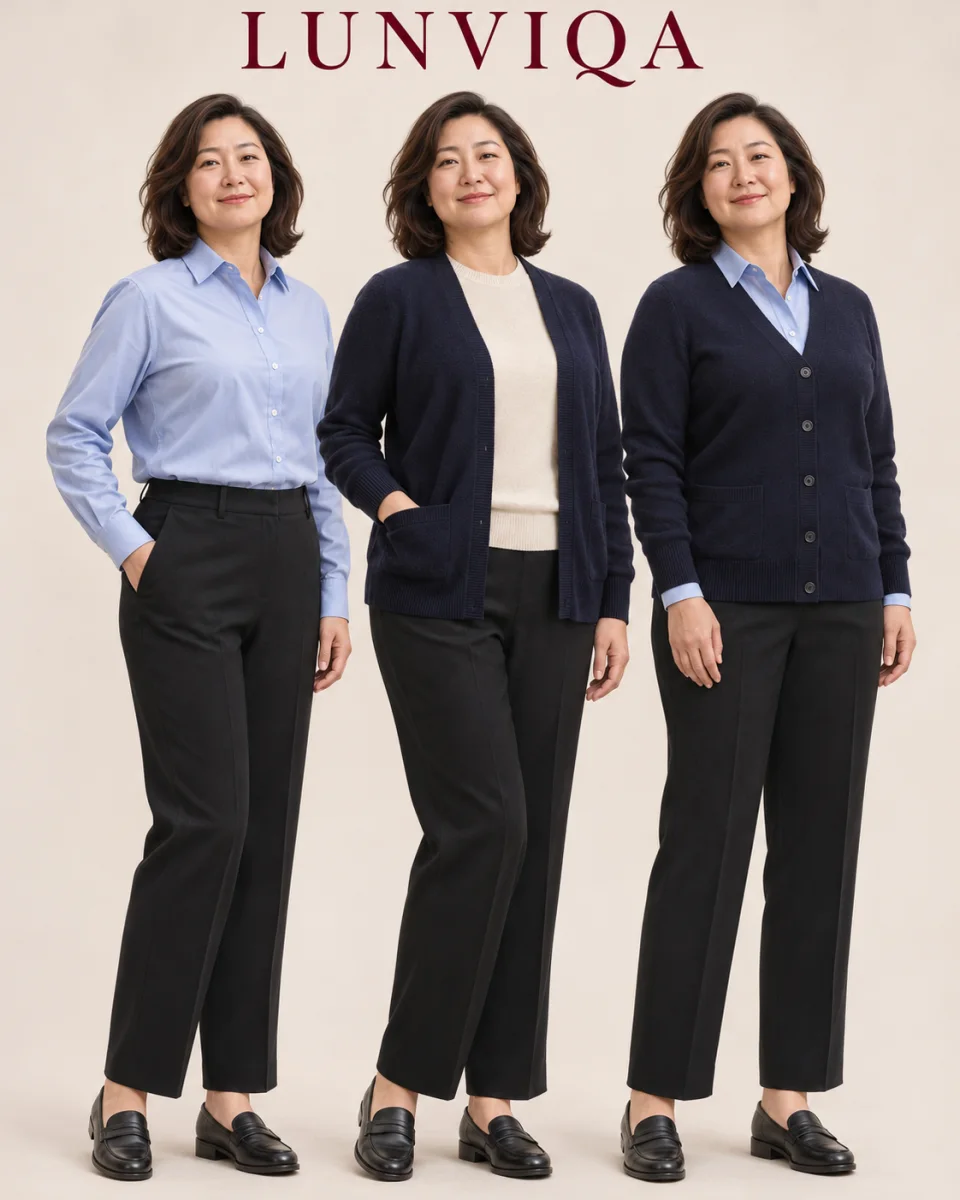
Build three office outfits with five pieces, counting shoes. A blue shirt, an ivory knit and a navy cardigan change what you see above the same black pants.
By LUNVIQA Editorial ·
Which five pieces do you need?
Pull out black straight-leg pants, black loafers, a pale blue button-down shirt, a fine ivory crewneck and a navy cardigan that buttons comfortably over the shirt. Those are the entire five pieces in the comparison. The trousers and shoes stay the same. Across three office days, the changes happen at the neckline, the waistband and the front opening of the cardigan.
Start with the pants you would choose on a busy morning anyway. Sit down, stand up and check them with the loafers. If you usually spend all day adjusting the waistband or lifting the cuffs on stairs, choose a different pair before building three outfits around them. Charcoal trousers work just as well; check them with the navy knit in daylight.
Day one: one shirt and a clear waistband
Wear the blue shirt with the pants and loafers. A full tuck gives the first outfit a distinct waist and leaves the front buttons visible. Lift your arms as if putting a folder on a shelf, then sit at a desk. If the shirt pulls out immediately, try a looser tuck with a little fabric released above the waistband. A shirt with a shorter, finished hem can also hang straight.
This is the lightest of the three outfits. Use it on the warmest office day or when you know a coat can stay by the door. You can swap the blue shirt for a pencil stripe: from across a room, the collar and visible placket will still make the same point.
Day two: an open cardigan and a broad light center
Wear the ivory knit and leave the navy cardigan open. The two dark side panels frame a long light area above the pants. The sweater hem can meet the waistband with no tuck, making this a useful version when you want more ease while seated. Check that the two knit sleeves pass each other at the elbow. If the layers twist, put your hand through each cardigan cuff and smooth the inner sleeve before deciding it feels too tight.
A plain light tee can stand in for the crewneck in a warm office. Choose one you already wear on its own in case you take the cardigan off. If your cardigan is cream, reverse the colors and use a darker base to keep the open front visible.
Day three: close the cardigan and bring back the collar
Put the blue shirt back on and button the cardigan over it. Leave enough space at the collar to see a triangle of blue and let a little cuff show. In the illustration the same cardigan that made two vertical stripes on day two now reads as one navy top. That change is visible on a video call as well as across a meeting table.
Check the button nearest the fullest part of the shirt. If it pulls when you reach for the keyboard, release that button or use a roomier cardigan. If the whole front looks strained when closed, use a V-neck pullover you own for this version and keep the cardigan for day two. That substitution takes the rail to six pieces.
How do you repeat this over a real workweek?
Space the looks across the week according to weather, laundry and meetings. Inspect the trousers and shirt between wears and clean them when needed according to their labels. If your pants are due for washing, use another pair or move the outfit to a later day. A five-piece exercise is a way to see combinations; you can change the count when your week changes.
Photograph all three combinations at the same distance. Cover the lower half of each photo with a sheet of paper and look at the necklines. You should see collar, crewneck, then collar inside a V. Uncover the pants and check the cardigan length in the last two photos. Save the three versions with the day or meeting when each would actually be useful.